Additional information
| Subjects | Life Orientation |
|---|

R45,00
Length: 68cm
Width: 48cm
7 in stock
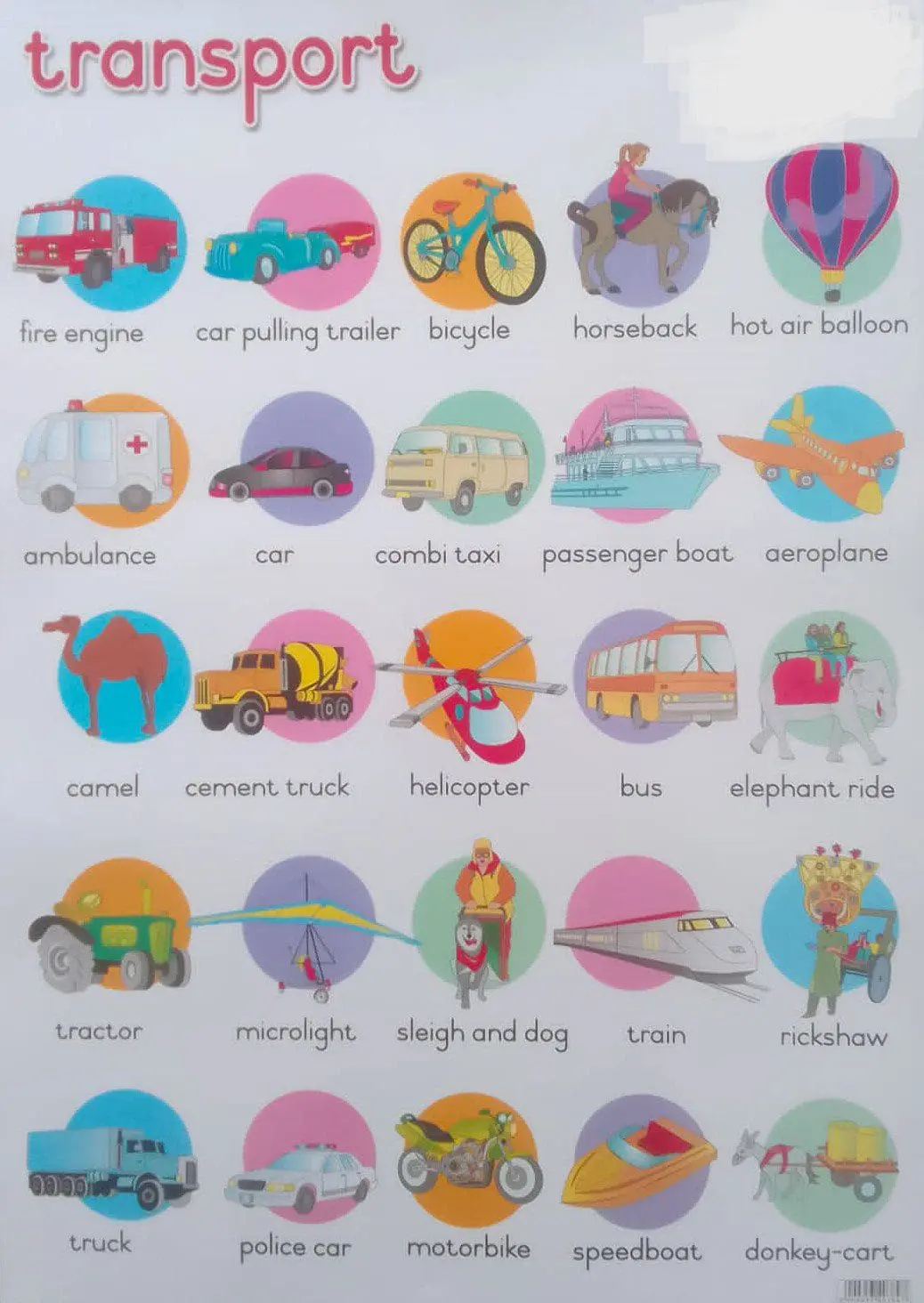
Introduce children to the exciting world of transport! The Transport Wall Chart provides a colourful and engaging visual reference that helps learners recognise and name different modes of transport. Measuring approximately 68 cm × 48 cm, this laminated chart combines durability with educational value, making it perfect for classrooms, libraries, and home learning spaces.
Learners explore familiar vehicles such as cars, buses, trains, bicycles, airplanes, and ships. Each illustration is clear, vibrant, and easy to identify, ensuring children quickly connect images with words. By displaying transport modes in a visually appealing format, the chart encourages discussions about travel, technology, and the role of transport in everyday life.
The laminated finish protects the chart against wear and tear, allowing repeated use in busy environments. Teachers can hang it in classrooms to support lessons on transport, geography, and social studies, while parents can use it at home to spark conversations about journeys, safety, and responsibility. The chart’s size makes it easy to read from a distance, serving as both a decorative and educational resource.
This chart does more than decorate a wall—it inspires children to think about how transport shapes the world around them. Teachers can use the chart to introduce lessons on travel and technology, while parents can encourage role‑play activities where children pretend to drive, fly, or sail different vehicles. By recognising transport modes, learners develop vocabulary, curiosity, and an appreciation for how people and goods move across the globe.
| Subjects | Life Orientation |
|---|


